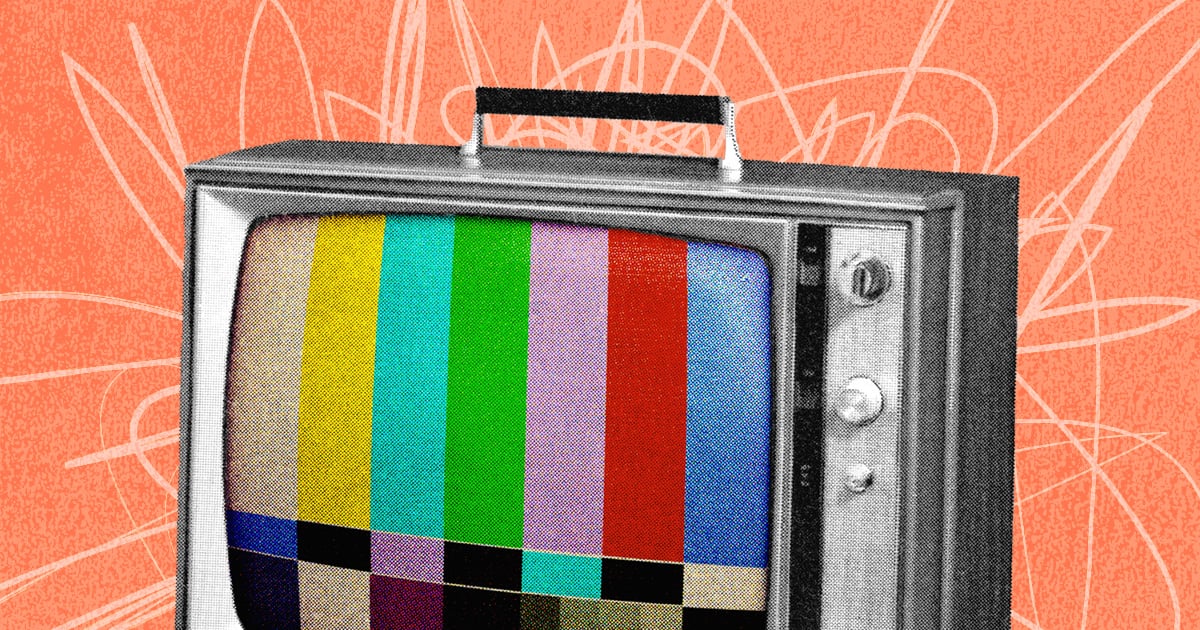
Background watchers: blink twice if you're OK. If you habitually have a TV show, movie, or podcast playing in the background while you do other tasks, you might be among the growing numbers of people who report using the sounds of shows as a buffer from their own internal monologue and who rely on filler noise to drown out any silence that makes them feel alone. Historically, my dear, lonesome background watchers, I have not considered myself among your ranks. Don't get me wrong, I'm just as lonely and lost as everyone else appears to be, but my auditory hypersensitivity means that competing sounds — like the shouting on a TV show against the clatter of dishes in my kitchen or the chatter of my couchmates — can be really irritating and overstimulating for me. I also come from a home of film buffs and screenwriters who keep their fingers trained on the pause button for any minor disturbance, so a particular watching etiquette was burned into my psyche from a young age. But even I have to admit that my watching habits are changing. Now more than ever before, when I have a show or podcast playing, I've noticed I'm more likely to reach for my phone and scroll Instagram or do a word puzzle (the New York Times Spelling Bee is my Achilles heel), not fully digesting anything on either platform. I feel dirty every time I do it, yet it's becoming routine. Many of us would probably blame the hyperconnectivity of the internet age for our increasing inability to focus — but research hasn't yet caught up enough to tell us exactly how all this hyperconnectivity is affecting our brains.
When did focus go out of fashion? Read on for a PS editor's examination.
|
















No comments:
Post a Comment